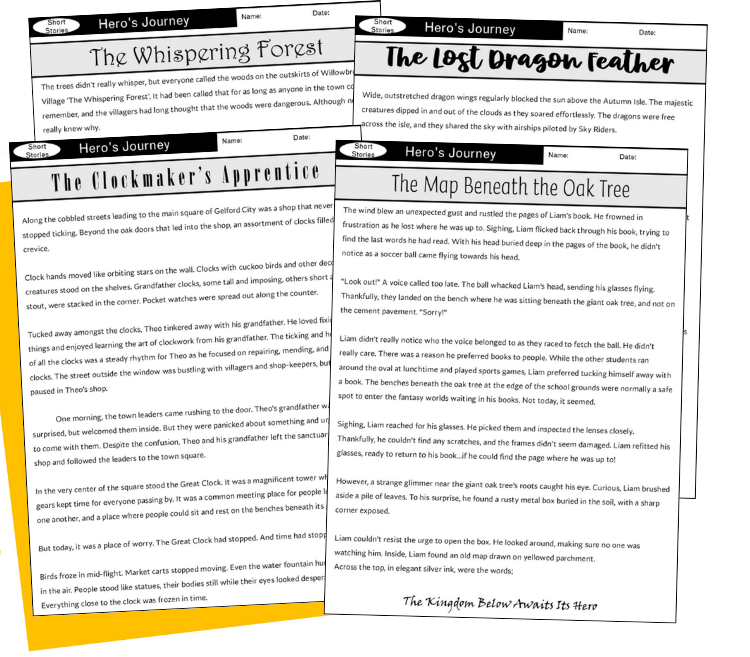
A page of reading comprehension activities and questions can look wonderfully productive. Students read a passage, answer ten questions, and move on to the next task. Yet sometimes, when we look more closely, the questions have become a collection of small hurdles rather than an opportunity to think deeply about the text.
A student may correctly identify a detail but struggle to explain its importance. Another may circle an answer for an inference without being able to point to evidence. Someone else may know the meaning of a word in isolation but miss how that word shapes the paragraph. These are useful reminders that comprehension is a group of connected habits and skills that help readers build meaning.
The most effective reading comprehension activities give students a reason to return to the text, talk about their thinking, and support their ideas. Here are five practical ways to make comprehension practice more purposeful in grades 4–6.

1. Begin with a clear purpose for reading
Before students read, give them a reason to pay attention. The purpose does not need to be complicated, and it should not turn the reading into a guessing game about which question will appear later.
For example, you might tell students:
- Read to discover how the problem in the article developed.
- Read to work out what the character wants and what is stopping them.
- Read to decide whether the author is mainly informing, persuading, or entertaining.
A clear purpose helps students notice relevant details. It also gives you a stronger foundation for discussion afterward. Instead of asking a long list of unrelated questions, you can return to the central purpose and ask, “What did the text help us understand?”
For a short informational passage about animal migration, students might read to explain how one environmental change affects the animals. Their attention is then directed toward causes, effects, and supporting details rather than every interesting fact on the page.
2. Treat vocabulary as part of comprehension
Vocabulary questions are often placed at the end of a passage, but word meaning is closely connected to the ideas students are forming while they read. Rather than asking only, “What does this word mean?” invite students to investigate how the word works in context.
Choose one or two important words and ask students to:
- Look for clues in the surrounding sentences.
- Substitute a possible synonym and decide whether the meaning still fits.
- Explain how the word affects the mood, image, or message.
- Identify a prefix, suffix, or root that provides a clue.
Imagine a narrative that describes a character as “reluctant” to enter an unfamiliar room. Students can infer that the character is hesitant or unwilling, but the richer discussion is about how that word helps readers understand the character’s feelings. Would the scene feel different if the author had written “curious” instead?
This kind of vocabulary in context practice links word study to character, tone, and meaning. It also encourages students to use more than a dictionary definition when they meet an unfamiliar word.

3. Make inference visible
Inference can feel mysterious to students when it is presented as simply “read between the lines.” Make the thinking more concrete by showing that an inference combines text evidence with what the reader already knows.
A useful structure is:
Text clue + what I know = my inference
For instance, if a story says that Maya checked the clock three times, packed her bag twice, and stood by the door before anyone called her name, students might infer that she is impatient or nervous about leaving. The text does not state this directly, so students need to explain which clues led them there.
Ask questions such as:
- What do you notice in the text?
- What does that detail suggest?
- Which words support your idea?
- Could there be another reasonable interpretation?
That final question is especially helpful. It shows students that inference is not wild guessing, but it also is not always a single-word answer. In an informational text, students might infer why a solution was successful by connecting several facts across a paragraph or section. Requiring evidence keeps the discussion grounded in the text for reading comprehension activities.

4. Separate the main idea from a list of details
Many students can find an interesting detail but have difficulty explaining what the whole paragraph or passage is mostly about. Help them move from collection to connection.
After reading a section, ask students to sort information into two groups: details that support the main idea and details that are interesting but less central. Then invite them to write a main idea statement that includes both the topic and the most important point about it.
For example, after reading about coral reefs, students might list facts about colorful fish, warm water, pollution, and shelter for marine life. A stronger main idea could be: “Coral reefs are important ecosystems that support many forms of marine life but are threatened by environmental changes.” This statement goes beyond naming the topic, and it avoids copying a single sentence from the text.
You can also ask students to give the section a new heading. A heading such as “Why Coral Reefs Matter” shows a different level of understanding from “Fish” or “The Ocean.” Short summaries, one-sentence gist statements, and heading activities are simple ways to make main idea practice more active.
5. Connect questions to written responses
Reading comprehension activities and questions become more meaningful when students regularly use their answers to build a response. This does not mean every passage needs a full essay. A few carefully chosen questions can lead to stronger writing than a long page of disconnected items.
Try moving through a sequence such as:
1. What happened or what did the text explain?
2. Which detail is most important?
3. What can you infer from that detail?
4. How does the author help the reader understand the idea?
5. What is your evidence-based response?
For example, after reading a biography, students might answer: “What challenge did the person face?” Then they could explain, “How did the person respond, and what does this reveal about their character?” A final response might ask them to support the idea that the person showed perseverance, using two details from the text.
Provide sentence frames when students need support, but gradually encourage more independence. Frames such as “The author suggests ___ because ___” or “One detail that supports this idea is ___” can help students practice the language of explanation without doing the thinking for them.
6. Explore the author’s purpose through choices
Author’s purpose is more useful when students examine the choices an author makes, rather than simply selecting inform, persuade, or entertain from a list. Ask students to notice the evidence behind their decision.
If the purpose is to persuade, what opinion does the author want readers to consider? Which examples, emotional language, or reasons support that opinion? If the purpose is to inform, how are facts organized? Does the author use headings, definitions, comparisons, or cause-and-effect explanations?
A quick comparison can work well. Give students two short texts about the same topic, such as school gardens. One might explain how gardens support pollinators, while the other argues that every school should have one. Students can identify the different purposes and compare the language and details each author uses.
This approach connects author’s purpose with text structure, vocabulary, tone, and evidence. It also helps students understand that nonfiction is shaped by decisions, not simply a pile of facts.

Make comprehension practice feel connected
Meaningful reading comprehension activities do not need to be elaborate. The important shift is to connect the questions so that each one helps students understand the text more fully. A vocabulary question can lead to an inference. An inference can support a main idea. A discussion of the author’s choices can lead to a written response.
When planning a lesson, choose a small number of high-value questions and ask yourself what each one is helping students notice. Give them time to return to the text, explain their thinking, and use evidence. That is where comprehension practice becomes more than answer checking: it becomes an opportunity for readers to build, test, and communicate meaning.
